Teacher School Education: A Designer's Review
As a designer who has spent years translating digital concepts into tangible thread, I approach every new asset with a critical eye. When I first opened the Teacher School Education file, my immediate goal was to determine if this graphic could survive the transition from a crisp 1920px X 1280px canvas to the complex reality of fabric and tension. This is not just about pretty pixels; it is about whether an embroidery design can hold up under the scrutiny of a customer holding a finished product in their hands.
The First Impression: Clarity and Intent
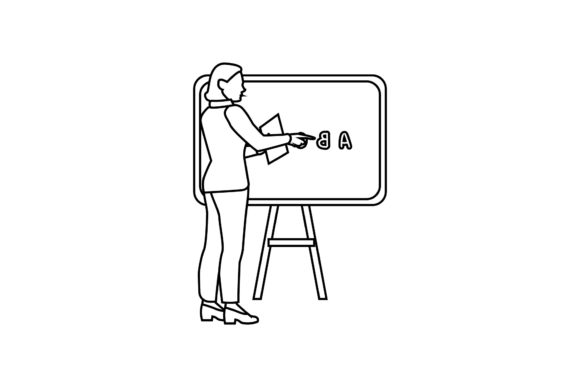
The initial view of Teacher School Education presents a clean, purposeful aesthetic typical of high-quality Graphics intended for branding or decorative use. The layout feels balanced, avoiding the clutter that often plagues educational themes where too many elements compete for attention. In the world of machine embroidery design, simplicity is often the precursor to success. The shapes appear distinct, which is a crucial indicator that the design will likely translate well into stitch paths without requiring excessive digitization cleanup.
What stands out immediately is the potential for versatility. The mood is professional yet warm, making it suitable for everything from a personalized gift for a retiring educator to a cohesive set of items for a boutique shop. However, as an experienced reviewer, I know that what looks good on a screen does not always guarantee a flawless finished product. The true test lies in how the lines interact with different stitch density settings and how the overall composition behaves when scaled down for smaller applications.
A Real-World Scenario: The Custom Tote Bag Project
To truly evaluate Teacher School Education, let us imagine a specific project: creating a limited run of custom tote bags for a local school fundraiser. As an Etsy seller or small business owner, you need a design that communicates quality instantly. I envision placing this graphic on a sturdy cotton canvas tote bag. The natural texture of the canvas provides a nice backdrop, but it also introduces challenges regarding fabric texture and thread visibility.
In this scenario, the tote bag design would benefit from the clear lines of the Teacher School Education icon. If the design features bold outlines, they would work beautifully with a satin stitch border, adding a premium feel to the bag. Conversely, if the interior areas are large, a dense fill stitch would be necessary to prevent the fabric from showing through. The key here is ensuring that the design remains legible even after being washed multiple times. A customer buying this as a personalized gift expects durability. If the stitching pulls or the details blur, the perceived value of the handmade item drops significantly.
Applying the Design to Apparel and Patches
Beyond tote bags, consider the application of Teacher School Education on custom apparel like sweatshirts or caps. For a sweatshirt embroidery project, the stretch of the knit fabric requires careful consideration of stabilizer choice. If the design includes fine details, the movement of the fabric during wear could distort the image over time. This is where the original resolution matters. Since the source file offers a high pixel count, there is room to scale the design appropriately without losing definition, provided the digitization process respects the original vector integrity found in the AI or EPS formats.
For those interested in creating an embroidered patch, this design holds significant promise. Patches require tight, dense stitching to ensure the edges remain clean when cut away from the backing. The Icons style of this graphic suggests it could work well as a standalone badge on a backpack or denim jacket. However, one must be cautious with tiny lettering. If the design incorporates text alongside the imagery, scaling it down for a cap might render the words illegible. In such cases, it is better to focus on the graphical elements alone or increase the hoop size to accommodate the full detail.
Navigating Challenges: Where Caution Is Needed
While Teacher School Education shows great potential, there are specific situations where it requires extra care. Small hoop sizes are a common pitfall. If you attempt to force this design into a 4x4 inch hoop, you risk overcrowding the stitches, leading to puckering or thread breakage. Always check the recommended dimensions before starting your embroidery project.
Textured fabrics like fleece or heavy wool can also obscure fine details. If the design relies on delicate lines, they may get lost in the nap of the fabric. In these instances, increasing the line weight or opting for a simpler version of the graphic might be necessary. Similarly, dark fabrics demand high contrast. You must select thread colors that pop against the background; otherwise, the design will look muddy and unprofessional.
Another area of concern is curved surfaces. Embroidering on a baseball cap requires specialized hoops and techniques to maintain the shape of the design. If Teacher School Education contains straight, rigid elements, they might warp slightly on a curved brim. Testing the design on scrap fabric first is non-negotiable. This allows you to adjust the stitch density and verify that the running stitch or fill patterns lay flat without distorting the underlying material.
Professional Notes for the Digital Creator
For the creative entrepreneur managing a craft business, the technical specifications of the file are paramount. The inclusion of AI and EPS files is excellent for scalability, allowing you to resize the artwork without degradation. However, remember that these are vector graphics, not ready-to-stitch files unless they have been digitized. If you are purchasing this as a raw asset, ensure you have the software and skills to convert it into a proper digital embroidery file format compatible with your machine.
Before launching a new product line featuring Teacher School Education, create printable mockups to visualize the final look. Test the design in black and white to assess contrast, then compare it against light and dark fabric backgrounds. This step is vital for maintaining brand consistency and ensuring that your small shop product looks as good in photos as it does in person.
Licensing is another critical factor. Whether you plan to sell the physical embroidered items or offer the design as a digital download, confirm the terms of use. Some licenses restrict commercial use or limit the number of items you can produce. As a responsible maker, verifying these details protects your business and builds trust with your customers.
Final Thoughts on Value and Execution
Ultimately, the success of Teacher School Education depends on how well it is executed. When used correctly, it adds a layer of professionalism and thoughtfulness to any handmade product. It transforms a simple garment into a meaningful statement piece. Whether you are creating holiday gifts, nursery decor, or merchandise for a boutique, the visual appeal of this design can significantly enhance buyer engagement.
By paying attention to stabilizer selection, thread color harmony, and appropriate sizing, you can ensure that the finished product meets the highest standards. This design is more than just a collection of pixels; it is a tool for storytelling and connection. With careful planning and a keen eye for detail, Teacher School Education can become a staple in your portfolio, delivering consistent quality and satisfaction for both you and your clients.