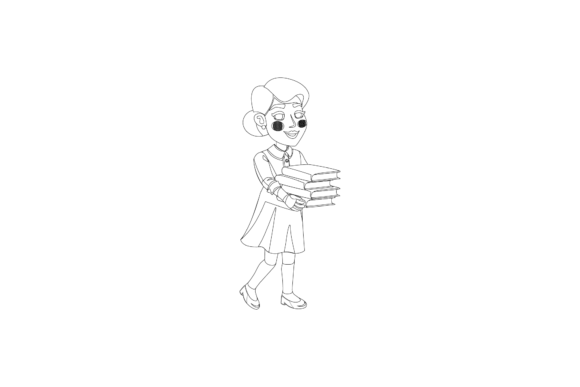
Teacher Education Learning Vectors Review
As a designer who has spent years navigating the intersection of digital art and physical stitching, I approach every new asset with a critical eye. When I first opened Teacher Education Learning Vectors, my immediate thought wasn't just about the visual appeal, but how these Graphics would translate from a crisp screen to the textured reality of fabric. This collection arrives as a set of Icons designed for clarity, offering a canvas size of 1920 px by 1280 px across five distinct formats: AI, EPS, SVG, JPG, and PNG. While the file variety is excellent for versatility, the real test lies in how these designs perform when converted into a functional machine embroidery design.
First Impressions: Visual Clarity and Mood
The aesthetic of Teacher Education Learning Vectors strikes a balance between professional utility and playful warmth. The shapes are clean, avoiding overly intricate linework that often gets lost during digitization. In the world of embroidery project planning, this is a massive advantage. Many vector sets look stunning on a monitor but fall apart when stitched because they rely on gradients or micro-details that thread cannot replicate. Here, the lines are bold enough to suggest strong fill stitch areas and defined edges suitable for satin stitch borders.
I found myself immediately thinking about the mood these design assets evoke. They feel encouraging and structured, perfectly suited for educational themes. Whether you are creating a personalized gift for a retiring educator or branding merchandise for a private tutoring center, the visual personality is consistent. It doesn't scream "loud," but rather whispers "quality." This subtlety is crucial for small shop product lines where the goal is to build trust and professionalism rather than just grab attention.
A Real-World Scenario: The Custom Tote Bag Project
To truly evaluate this set, I imagined a specific client request: a boutique owner wants to launch a line of eco-friendly tote bags for teachers' appreciation week. She needs a design that looks high-end but can be produced quickly without excessive thread consumption. Using Teacher Education Learning Vectors, I could visualize placing a central icon—perhaps an open book or a stylized apple—on the front panel of a natural cotton tote.
In this scenario, the tote bag design benefits immensely from the vector's scalability. Since the source files are available in AI and EPS, resizing the image to fit a standard 5x7 hoop or even a larger 10x10 hoop becomes seamless. The key here is maintaining the integrity of the lines. If I were to downsize this for a smaller accent patch, the bold nature of the Icons ensures that the details remain legible. Unlike some thin-line vectors that turn into muddy blobs when reduced, these hold their shape, promising a clean finished product that customers will appreciate.
However, the transition from digital to physical requires careful planning. Cotton tote bags have a visible weave. If the stitch density isn't managed correctly, the fabric texture might show through the fill areas, giving the impression of a cheap job. With Teacher Education Learning Vectors, the solid shapes allow for a moderate density that covers the fabric well without adding unnecessary bulk, which is vital for items like totes that need to remain flexible.
Navigating Fabric Challenges and Placement
While the design potential is high, not every application is straightforward. As a reviewer, I must highlight where caution is needed. These Graphics work beautifully on stable fabrics like denim, twill, or heavy cotton blends. However, applying them to stretchy materials like jersey knit for a sweatshirt embroidery project requires a strategic approach. Without the proper stabilizer, the tension of the machine can distort the clean lines of the vectors, turning sharp corners into rounded, wobbly edges.
Consider the context of baby embroidery. Parents love personalized items, but baby clothes are washed frequently and subjected to rough play. If you use Teacher Education Learning Vectors for a onesie, ensure the stitch count isn't too dense. A heavy fill can make the fabric stiff and uncomfortable against delicate skin. The design's simplicity actually helps here; by keeping the running stitch outlines minimal and the fills light, you maintain comfort while achieving a professional look.
Another area of concern is dark fabric. The preview images provided in JPG and PNG formats usually assume a white background. When embroidering on black fleece or navy blue aprons, the contrast becomes your best friend. You will likely need to adjust the thread colors significantly. A light gray or pastel outline might disappear entirely on dark material. Always test a small section first. The vector format allows you to easily invert colors or add a backing layer (a technique similar to an applique design) to ensure the motif pops.
Practical Notes for Designers and Makers
If you are an Etsy seller or a creative entrepreneur looking to integrate these assets into your business, there are several practical steps to take before committing to a full production run. First, always test the design on scrap fabric that matches your final project material. This simple step reveals issues with puckering, thread breaks, or registration errors that aren't visible on screen.
Second, pay close attention to the hoop size. Even though the canvas size is listed as 1920 x 1280 pixels, this is a digital measurement. Your physical machine has limits. If you plan to create an embroidered patch, ensure the design fits comfortably within your hoop with room for the stabilizer to grip the edges. Cropping the design too tightly can lead to loose threads and a messy finish.
Third, consider the commercial implications. Before selling any handmade product featuring these vectors, confirm the licensing terms. The description mentions availability in five formats, which suggests flexibility, but you must verify if you are allowed to sell the physical goods or if the license is restricted to personal use. Misunderstanding this can jeopardize your craft business.
Finally, don't forget the power of mockups. Creating a printable mockup of your design on various products helps you visualize the final result and market it effectively. Use the high-resolution JPG or PNG files to place the design onto photos of caps, pillow covers, or tea towels. This helps potential buyers see exactly what they are getting, increasing buyer engagement and confidence in your brand.
Final Verdict on Value and Versatility
Teacher Education Learning Vectors stands out as a reliable resource for designers who value clarity and adaptability. It avoids the trap of over-complication, offering a clean foundation that can be elevated with thoughtful color choices and proper digitization techniques. Whether you are crafting a holiday gift, producing commercial embroidery for a school event, or stocking your handmade shop with unique items, these vectors provide a solid starting point.
The true value lies in its ability to bridge the gap between digital creativity and tangible craftsmanship. By respecting the limitations of thread and fabric, and leveraging the strengths of the vector format, you can create custom apparel and accessories that feel premium and professional. For the seasoned maker or the ambitious beginner, this set offers the tools needed to execute projects with confidence, ensuring that the final stitch is as perfect as the initial concept.